

Manufacturers use rivets to join metal sheets, panels, and other components across many industries. These fasteners provide reliable connections, especially when workers can only access one side of a joint.
However, different rivet designs meet different fastening requirements. Open-end and closed-end models differ in body structure and sealing performance. Choosing the right type helps manufacturers improve joint reliability and reduce the risk of leakage.
In this guide, we explain how these two designs differ. We also explain how sealing blind rivets help prevent leaks. Finally, we explain how to choose the right option for your application.
1. What Are Open-End Rivets?
Open-end rivets are popular fasteners for general assembly. Each rivet contains a body and a mandrel. During installation, a compatible tool pulls the mandrel and expands the body to clamp the joined materials together.
The mandrel then breaks at its designed breaking point, leaving the rivet in place.
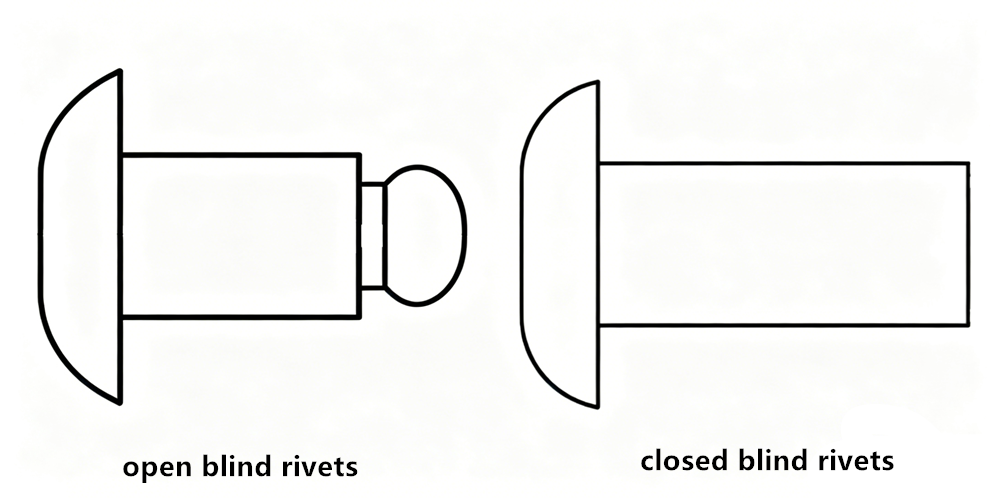
Open-end models have an open tail. This design makes them suitable for many standard fastening tasks. However, the open tail does not create a sealed barrier. Water or air can pass through the rivet body.
Common Applications of Open-End Rivets
We use open-end rivets in many applications, including:
.Sheet metal fabrication
.General industrial assembly
.Automotive components
.Metal cabinets and enclosures
.Furniture and appliance manufacturing
.Projects that do not require sealing through the fastener body
Advantages of Open-End Rivets
Open-end designs offer several practical benefits:
Versatile options: Manufacturers supply these fasteners in various materials, diameters, lengths, and head styles.
Easy installation: Workers can install them with compatible manual, pneumatic, or battery-powered tools.
Cost-effective fastening: Many general assembly projects benefit from their economical design.
Wide availability: Buyers can find standard sizes for a broad range of applications.
Choose open-end rivets when you need reliable mechanical fastening but do not require a sealed tail.
2. What Are Closed-End Rivets?
Closed-end rivets feature a closed tail at the end of the body. Manufacturers also call them sealed rivets because their design helps stop liquid or air passing through the fastener.
This structure makes closed-end models useful for assemblies that require improved resistance to leakage.
Workers install these products with compatible riveting tools. The tool pulls the mandrel, expands the body, and clamps the joined materials together. The closed tail then helps block the direct passage that an open-end design leaves.
Common Applications of Closed-End Rivets
We may choose closed-end rivets for:
.Electrical enclosures and equipment housings
.Automotive components exposed to moisture
.Outdoor equipment and metal structures
.Containers and sheet metal assemblies
.Applications that require reduced leakage through the fastener
.Assemblies where moisture could affect performance
Before selecting a product, check the required sealing performance, material , joint design, and installation conditions.
Advantages of Closed-End Rivets
Closed-end designs offer several benefits:
Improved sealing through the body: The closed tail helps block direct passage through the fastener.
Reduced moisture ingress: The design helps limit water entry through the rivet body.
Support for demanding applications: These products suit assemblies that face moisture and other environmental challenges.
Reliable fastening: Workers can install them when they cannot access the back of the joint.
Keep in mind that a closed tail does not automatically make an entire joint waterproof or airtight. Hole dimensions, mating surfaces, installation quality, and assembly design all affect the final sealing performance.
3. Open-End vs. Closed-End Rivets: Key Differences
The main difference lies in the tail structure. Open-end models leave the tail open, while closed-end models seal that end to help restrict leakage through the body.
Feature: Open-End Rivets | Closed-End Rivets
Tail structure: Open | Closed
Sealing through the body: Does not form a full barrier. | Helps limit passage through the body.
Typical use: General fastening. | Uses that need better sealing.
Moisture protection: Depends on the joint design. | Helps reduce leakage through the body.
Installation: Uses the same riveting tool. | Uses the same riveting tool.
Cost: Often economical. | May cost more, based on specs.
Main selection factor: Fastening needs. | Fastening and sealing needs.
Both types come in different materials, sizes, and head styles. Compare the required joint strength, working environment, material, and sealing needs before choosing a product.
4. How Do Sealing Blind Rivets Help Prevent Leakage?
Sealing blind rivets help reduce the chance that liquids or air will pass through the fastener body.
An open-end model leaves its tail open after installation, creating a potential passage through the body. A closed-end model closes this passage and helps prevent direct leakage through the fastener.
For this reason, manufacturers often consider sealed rivets for assemblies that face water, humidity, or other environmental conditions.
However, the fastener alone cannot determine the sealing performance of the entire joint. Check these factors before selecting a product:
Hole diameter: Choose the correct hole size to support proper installation and joint performance.
Material condition: Match the fastener material to the joined components and the operating environment.
Installation quality: Use a compatible tool and stay within the specified grip range.
Joint design: Check for gaps, uneven surfaces, and other openings that could allow leakage around the fastener.
Operating conditions: Consider pressure, temperature, vibration, and chemical exposure.
If your application requires a specific waterproof or airtight rating, review the specifications and test data. You may also need gaskets or sealants to achieve the required performance.
5. How to Choose the Right Type
Start by identifying the fastening and sealing requirements of your application.
Choose Open-End Rivets When:
.You need general-purpose mechanical fastening.
.You do not require sealing through the rivet body.
.You want an economical solution for routine assembly.
.Your application suits a standard open-tail design.
Choose Closed-End Rivets When:
.You need to reduce leakage through the fastener body.
.Your assembly may face moisture or environmental status.
.Your design requires a closed tail.
.Sealing performance forms part of your fastening specification.
Before placing an order, confirm the required diameter, length, grip range, head style, material, and joint strength.
For applications with strict leakage requirements, verify the product’s rated performance. Do not assume that every closed-end model meets every waterproofing or airtightness requirement.
6. Frequently Asked Questions
A.What Are Sealing Blind Rivets?
Sealing blind rivets help prevent liquids or air from passing through the fastener body. Closed-end models offer a common solution when an application requires improved resistance to leakage through the fastener.
B.What Is the Difference Between Open-End and Closed-End Rivets?
Open-end models have an open tail, while closed-end models have a closed tail. The closed design helps restrict direct passage through the body, making it a better option when sealing matters.
C.Are Closed-End Rivets Waterproof?
Closed-end rivets help reduce water leaks through the fastener body. However, they do not guarantee a fully waterproof joint. Check the hole, mating surfaces, installation quality, and product specifications to determine whether the assembly meets your requirements.
D.When Should You Use Sealed Rivets?
Choose sealed rivets when your assembly needs a closed tail or improved resistance to leakage through the fastener. These products may suit equipment housings, enclosures, and assemblies exposed to moisture. Always confirm that the selected model meets your application’s requirements.
E.Can You Replace Open-End Rivets with Closed-End Rivets?
You can replace open-end models with closed-end alternatives in some applications. First, confirm that the replacement matches the required diameter, length, grip range, material, and mechanical performance. Also check whether the change affects installation or joint design.
F:Do Closed-End Rivets Cost More?
Closed-end models may cost more than comparable open-end products. Material, dimensions, manufacturing specifications, and order quantity all affect the price. Compare products with equivalent specifications before making a purchasing decision.
Conclusion
Open-end and closed-end rivets help manufacturers make reliable joints when they can only access one side.
Open-end models suit general fastening, while closed-end designs help restrict leakage through the fastener body. If your application requires improved sealing, consider a closed-end product and verify its performance against your specifications.
Always consider material, grip range, hole size, installation quality, and joint design when selecting a fastener.
Post time: Jun-29-2026