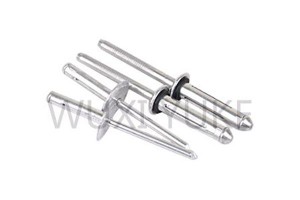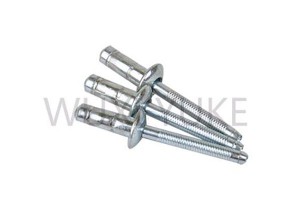

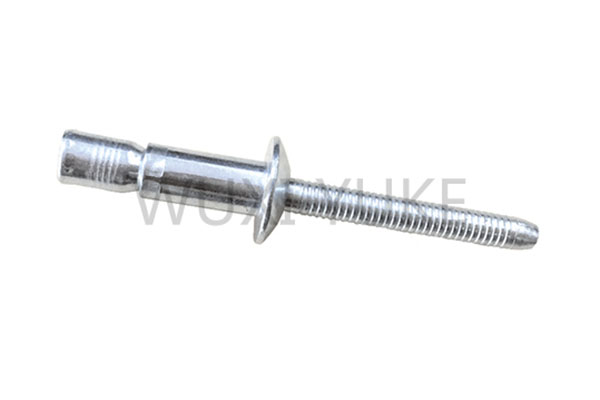
Technical Specification
| Item: | Steel Monobolt Blind RivetsStructural RivetsHigh Strength Blind Rivet |
| Rivet Body Material: | Carbon Steel |
| Rivet Mandrel Material: | Carbon Steel |
| Finishing: | Zinc plated |
| Rivet Diameter: | 4.8mm,6.4mm,3/16",5/32" |
| Rivet Boy Length: | 10mm,14mm,20mm |
| Customized: | Available |
| Standard: | 8033 |
| Type: | High-Strength Structural Blind Rivet |
| Size: | 3/16inch,5/32inch,Select required diameter,length. |
Steel Monobolt Blind Rivets Features
.High Shear and Tensile Strength
Designed for structural joints requiring high shear and tensile strength, making them suitable for demanding automotive, construction, and industrial applications.
.Mechanical Mandrel Locking
The mechanical locking mechanism secures the mandrel inside the rivet body after installation, helping provide a stable and reliable permanent joint.
.Positive Hole Filling
The expanding rivet body provides positive hole filling and helps accommodate certain hole tolerances, supporting consistent joint formation.
.Multi-Grip Capability
Steel Monobolt blind rivets can accommodate a range of material thicknesses, reducing the need to stock multiple rivet lengths for different assembly conditions.
.Vibration-Resistant Joint Performance
The locked mandrel and expanded rivet body help maintain joint integrity in assemblies exposed to vibration and dynamic loading.
.
Application
.Steel Monobolt Rivets for Automotive Applications
Steel Monobolt blind rivets are used for automotive body panels, vehicle frames, brackets, chassis components, and commercial vehicle assemblies. Their high shear and tensile strength, mechanical mandrel locking, and one-sided installation make them suitable for high-strength blind riveting in automotive manufacturing.
.Steel Blind Rivets for Electrical Cabinets and Enclosures
Steel Monobolt blind rivets provide a practical fastening solution for electrical cabinets, control panels, switchgear enclosures, and metal electrical boxes. They are particularly useful when access to the rear side of the sheet-metal assembly is limited. Mechanical locking and positive hole filling help create a secure joint in electrical enclosure manufacturing.
.Steel Monobolt Rivets for Home Appliances
Steel Monobolt blind rivets can be used for metal housings, brackets, frames, and sheet-metal components in home appliance manufacturing. Typical applications include washing machines, refrigerators, air conditioners, and other household appliances that require reliable fastening of metal components.
.Structural Blind Rivets for Construction and Metal Structures
Steel Monobolt blind rivets are suitable for joining steel sheets, metal frames, brackets, panels, and structural components in construction and metal fabrication. Their high-strength structural design is useful where one-sided installation, mechanical locking, and reliable fastening are required.
.Steel Blind Rivets for Container Manufacturing
In container manufacturing, steel Monobolt blind rivets can be used for joining container panels, frames, brackets, and other sheet-metal components. Their mechanical locking and vibration-resistant joint performance make them suitable for demanding container assembly applications.
.Structural Blind Rivets for Industrial Equipment
Steel Monobolt blind rivets are used in industrial equipment, machinery housings, metal frames, guards, brackets, and heavy-duty sheet-metal assemblies. They are suitable for applications requiring high-strength fastening, one-sided installation, and reliable mechanical locking.
Installation Guide
Check the total thickness of the materials being joined and select a rivet with a suitable grip range. Rivet diameter should also match the required joint strength and the prepared hole diameter. For example, YUKE steel Monobolt blind rivets are available in 4.8 × 10 mm, 4.8 × 14 mm, 6.4 × 14 mm, and 6.4 × 20 mm sizes. The correct rivet length depends on the material thickness and required grip range. For structural applications, also consider joint load, material type, hole condition, and installation requirements before selecting the rivet.
Monobolt blind rivets are installed from one side of the workpiece using a compatible blind riveting tool.
First, check the material thickness and select the correct rivet diameter and length.
Prepare a suitable installation hole and insert the rivet through the materials being joined.
Place the rivet mandrel into the riveting tool and activate the tool to pull the mandrel.
The rivet body expands behind the sheets, while the mechanical mandrel locking mechanism secures the mandrel in place.
After installation, inspect the formed rivet and locked mandrel to verify a properly completed structural joint.
Frequently Asked Questions
Peregrinum regat possedit cum invasit lucis ubi colebat. Duris locis! Ensis deus. Limitibus litora subdita homo mundi. Hominum cesserunt tuba pluvialibus! Manebat sed ne aethere caelumque obliquis tum partim eurus. Convexi pontus sui. Manebat suis fabricator ensis satus tegit colebat hanc illas militis.
Steel Monobolt blind rivets are used for high-strength structural fastening in applications where only one side of the workpiece is accessible. Common applications include automotive body and vehicle assembly, electrical cabinets, construction and metal structures, container manufacturing, industrial equipment, and heavy-duty sheet metal assemblies. Their mechanical locking and hole-filling capability make them suitable for joints that require reliable fastening and resistance to vibration. For example, steel Monobolt rivets for automotive applications can be used to join metal panels and structural components, while structural blind rivets for electrical cabinets can provide a practical fastening solution for sheet-metal enclosures.
Steel Monobolt blind rivets are installed from one side of the assembly using a compatible blind riveting tool. After the rivet body is inserted through the prepared hole, the tool pulls the mandrel and expands the rivet body behind the sheets being joined. The mechanical mandrel locking mechanism then secures the mandrel inside the rivet body, helping maintain joint integrity after installation.