
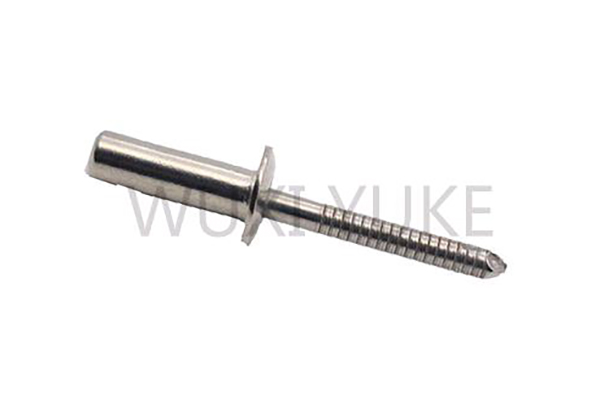
Technical Specification
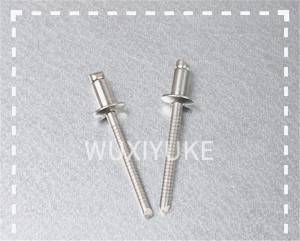
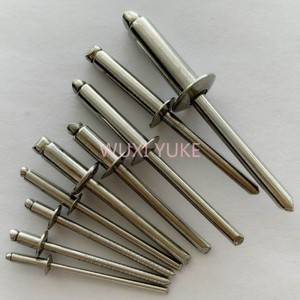
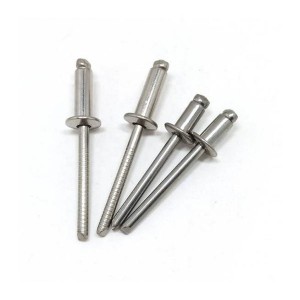
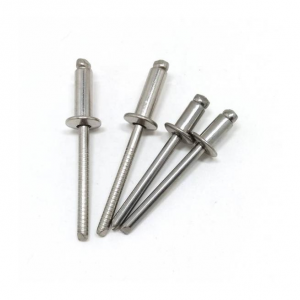
Type: Stainless Steel Seal End Blind Rivet|Closed End BLind Rivets
Waterproof Blind Rivets
Rivet Body Material: 304 Stainless Steel
Rivet Mandrel Material:304 Stainless Steel
Rivet Head:Dome Head|Open End
Rivet Body Diameter:3.2mm, 4.0mm, 4.8mm, 6.4mm, (1/8", 5/32", 3/16",1/4")
Standard: DIN 7337, GB12615
Min Tensile:2200N~8000N
Min Shear:2000N~6000N
Features
Closed-End : Seal end blind rivets help prevent liquid and gas from passing through the rivet body.
Corrosion Resistance: 304/316 Stainless steel closed end blind rivets are suitable for demanding and humid environments.
Reliable Fastening: Waterproof blind rivets provide secure fastening for metal sheets and enclosed assemblies when correctly selected and installed.
Versatile Applications: Ideal for automotive panels, electrical enclosures, machinery, and outdoor equipment.
Custom Options: Available in different blind rivet sizes, materials, and specifications to meet industrial fastening requirements
Applications:
Manufacturers use seal end blind rivets to fasten metal sheets and protect enclosed assemblies from unwanted moisture and debris
Automotive manufacturers install closed end blind rivets in body panels and interior components.
Electrical equipment makers use waterproof blind rivets to secure enclosures and control cabinets.
Machinery manufacturers choose stainless steel closed end blind rivets for equipment exposed to humid or corrosive environments.
These fasteners also suit outdoor equipment, HVAC systems, and metal fabrication projects that require reliable fastening and a closed-end design.
Always select the right rivet material, grip range, and sealing performance for your application.
Installation Guide
Seal end blind rivets install from one side of the workpiece using a compatible blind riveting tool. Follow these steps to create a secure joint.
1. Select the Correct Rivet Size
Choose a seal end blind rivet that matches the combined material thickness. Check the rivet diameter and grip range before installation.
2. Prepare the Rivet Hole
Install the parts and drill a clean hole to the diameter specified for the selected rivet. Remove burrs and ensure the mating surfaces sit flat.
3. Insert the Closed-End Blind Rivet
Place the rivet body into the prepared hole until the flange sits firmly against the near surface. Make sure the closed end faces the inaccessible side of the joint.
4. Set the Rivet with a Riveting Tool
Insert the mandrel into the nosepiece of a compatible blind rivet tool. Keep the tool aligned with the rivet head and operate it according to the tool manufacturer's instructions. The tool pulls the mandrel, causing the rivet body to expand behind the workpiece and clamp the materials together.
5. Inspect the Finished Joint
Check that the rivet head sits flush against the surface, the materials remain firmly clamped, and the mandrel has broken off as intended. For applications requiring a watertight or airtight joint, verify the sealing performance under the actual service conditions.
Use the specified rivet diameter, grip range, hole size, and installation tool for your chosen seal end blind rivet. Correct installation helps achieve reliable fastening and the intended sealing performance.




Transportation
| Transport : | By sea,By truck or By air |
| Payment Terms: | L/C, T/T, Western Union |
| Port: | Shanghai ,Ningbo, China |
| Lead Time : | 15~20 Working Day for A 20' Container,5days for stocked product |
Frequently Asked Questions
A:Closed-end blind rivets are available in different material combinations, including stainless steel body and mandrel, steel body and mandrel, and aluminum body with a steel mandrel. Material selection depends on strength requirements, corrosion exposure, and the materials being joined.
A:Closed-end blind rivets are designed for applications requiring improved resistance to liquid penetration through the rivet body. However, a fully watertight joint is not guaranteed by the closed-end design alone. Performance depends on the rivet specification, hole preparation, installation, and service conditions.
A:Sealed end blind rivets are installed from one side using a compatible blind riveting tool. Insert the rivet into the prepared hole, position the tool over the mandrel, and pull the mandrel until the rivet body expands and clamps the materials together. Inspect the finished joint after installation.