

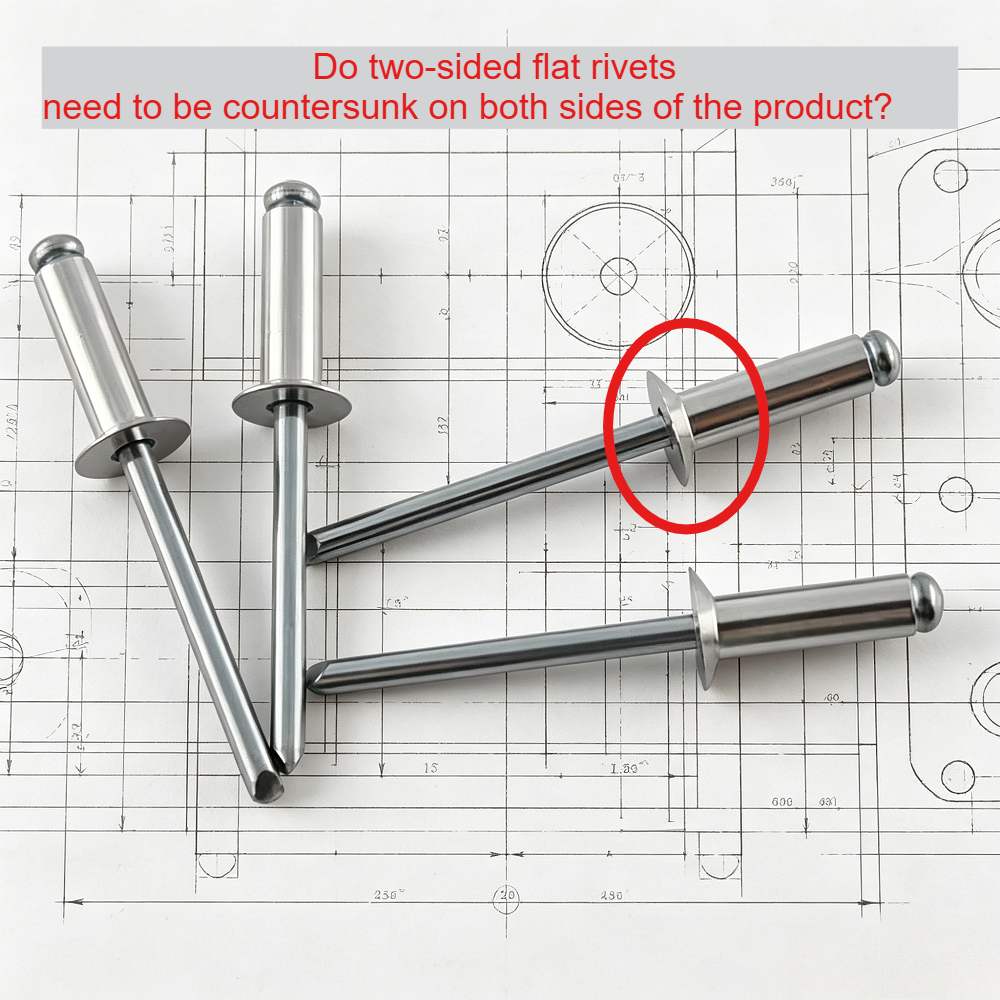
1. What Are Flat Rivets On Both Sides and Their Core Characteristics?
A key feature of FLAT RIVETS ON BOTH SIDES is that after riveting, there is no loose nail head, and both riveted surfaces of the product remain flat—a trait that makes them ideal for thin-sheet riveting in tight spaces, such as communication cabinets in the IT industry and electronic device casings. Common long-tail keywords related to these rivets include "flat rivets on both sides for thin sheets", "double-sided flat rivets material selection", and "flat rivets on both sides surface finish requirements".
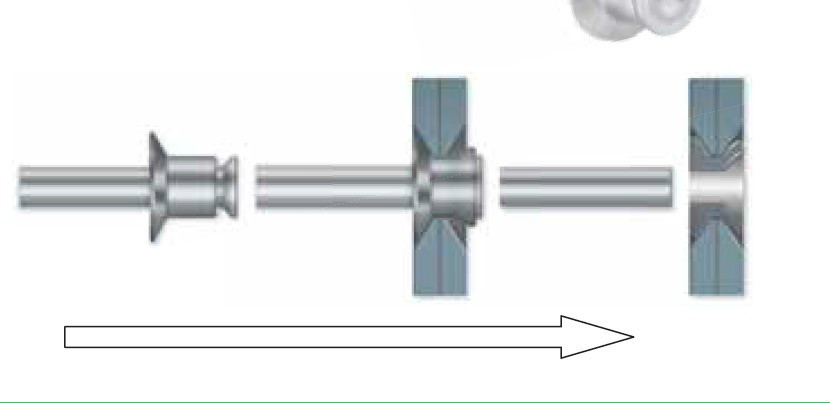
2. Do FLAT RIVETS ON BOTH SIDES Need to Be Countersunk on Both Sides?
The core question—whether FLAT RIVETS ON BOTH SIDES require double-sided countersinking—cannot be answered with a simple "yes" or "no". It mainly depends on two core factors: the product’s surface flatness requirements and the rivet’s structural design.
2.1 When Double-Sided Countersinking Is Required
If your product has strict requirements for surface flatness—such as automotive interior panels, high-precision electronic equipment casings, or architectural cladding—double-sided countersinking is necessary for FLAT RIVETS ON BOTH SIDES. Countersinking creates an angled recess that matches the rivet head, allowing the rivet’s flat heads to sit perfectly flush with the product surface, eliminating protrusions that could affect appearance or cause friction damage.
For example, in the production of refrigerator drawers or cabinet drawers, FLAT RIVETS ON BOTH SIDES are often used to fasten drawer panels. Double-sided countersinking ensures that both the inner and outer surfaces of the drawer are smooth, avoiding scratches on items or user hands. This scenario also involves the long-tail keyword "flat rivets on both sides for furniture countersinking".
2.2 When Double-Sided Countersinking Is Not Required
If the product’s surface does not have high flatness requirements—such as industrial equipment brackets, non-visible structural components, or temporary fastening—double-sided countersinking for FLAT RIVETS ON BOTH SIDES is unnecessary. The inherent flat-head design of these rivets can already meet basic surface requirements, and omitting countersinking can save processing time and reduce costs.
Additionally, some specially designed FLAT RIVETS ON BOTH SIDES (such as hollow double-sided flat rivets) have a low-profile structure that can fit closely to the product surface without countersinking, further simplifying the installation process. In such cases, countersinking would be redundant and may even weaken the structural strength of the product. A relevant long-tail keyword here is "hollow flat rivets on both sides installation without countersinking".
Post time: May-19-2026